CPPC Presents Recommendations to the Gallant Commission
François Émond, recently had the opportunity to present the Council’s recommendations to the Honourable Denis Gallant as part of the public consultations held by the Gallant Commission in Quebec.
The Gallant Commission, formally known as the Commission of Inquiry into the Management of the Modernization of the SAAQ’s IT Systems, was established in response to the significant challenges and cost overruns associated with the SAAQclic project. The Commission aims to shed light on systemic issues in public procurement and governance, and to propose concrete solutions to prevent similar failures in the future.
As part of its mission, the Canadian Public Procurement Council (CPPC) promotes dialogue and networking among procurement professionals, facilitates the exchange of information and knowledge, develops collaborative approaches to common issues, and provides leadership in resolving shared challenges. Our participation in the Gallant Commission reflects this commitment to advancing best practices, transparency, and accountability in public procurement across Canada.
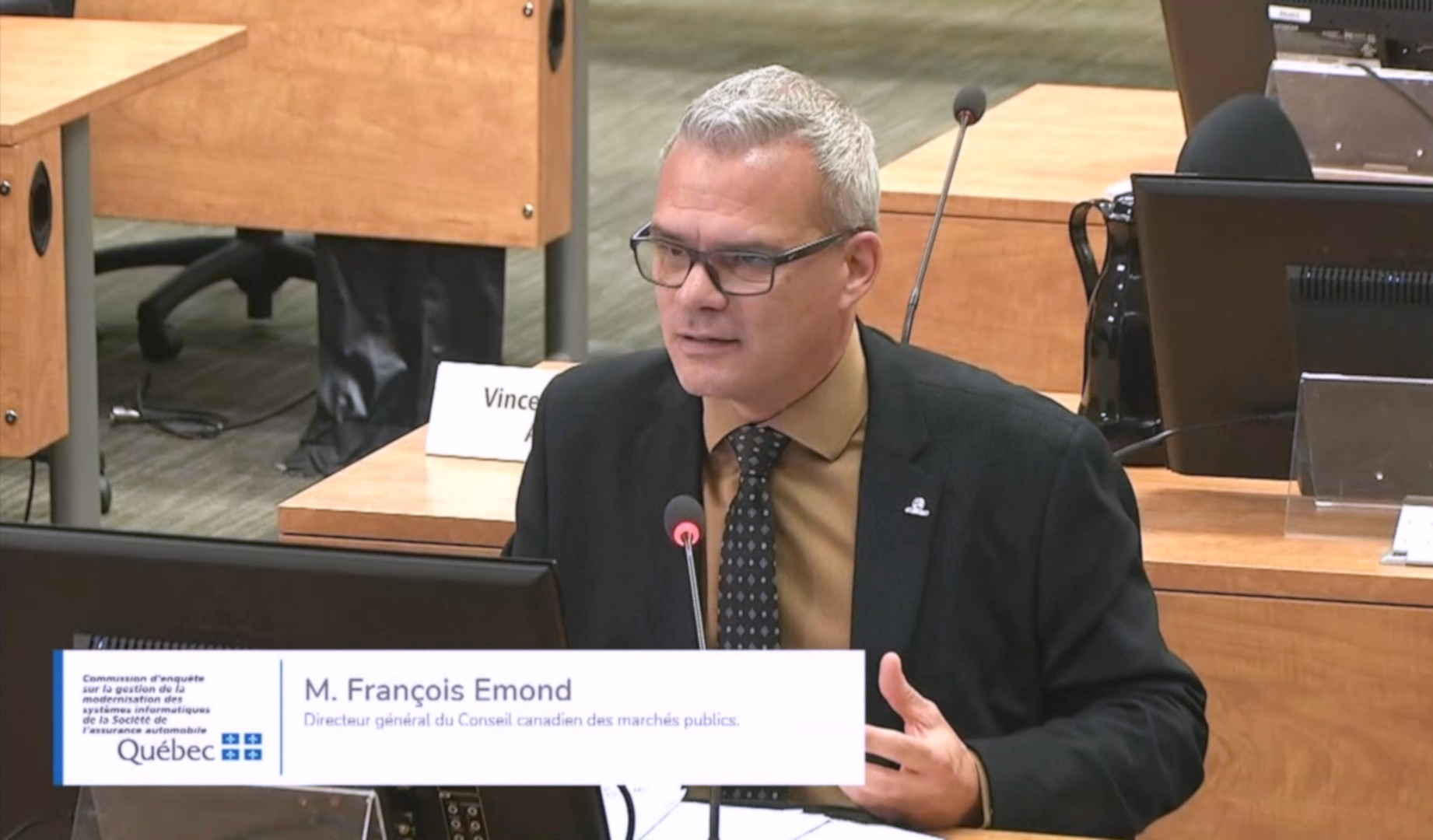
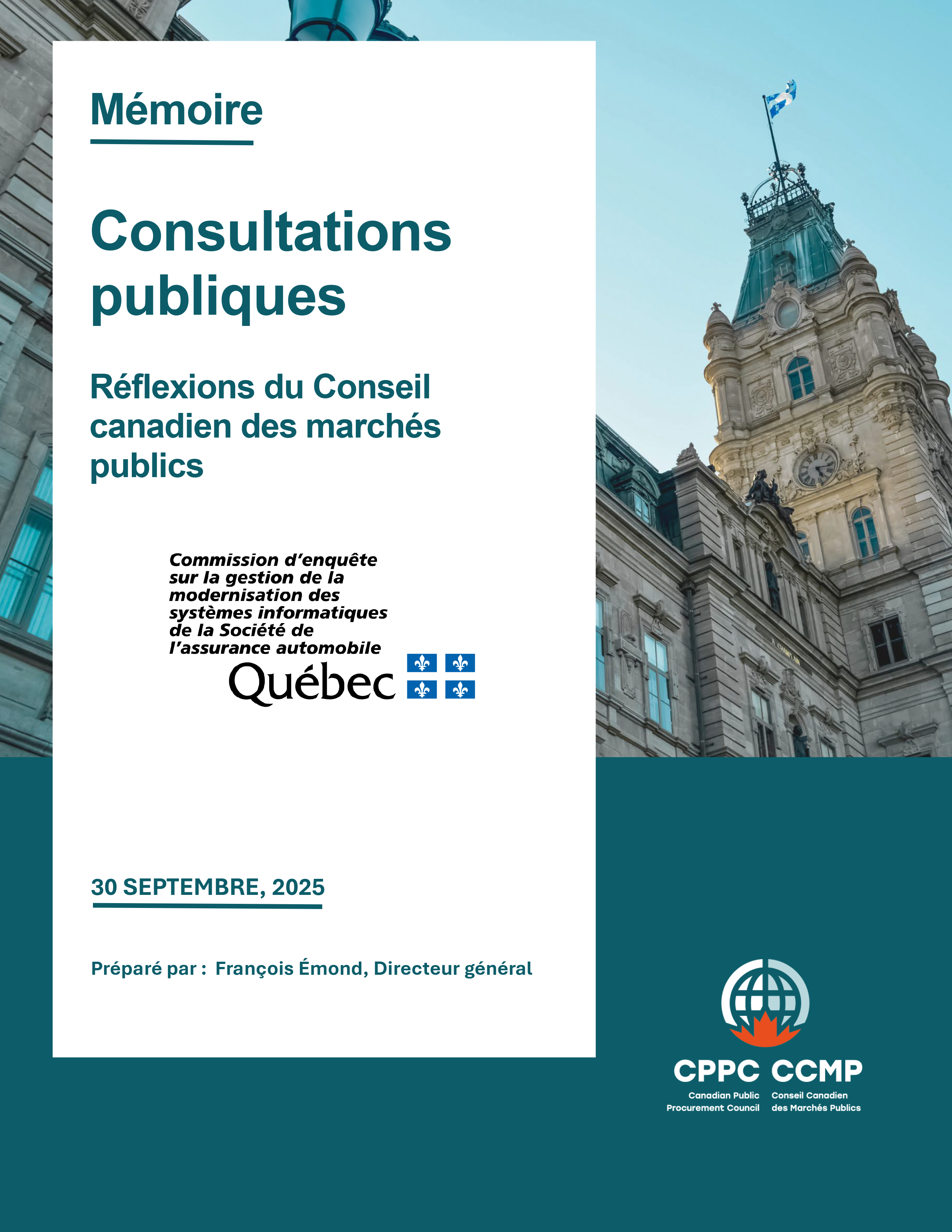
This report is a translation of the original recording transcript.
The brief presented by the CPPC highlights several systemic issues:
Key recommendations include:

To learn more about the Commission and the SAAQclic inquiry, we invite you to explore the following resources:

